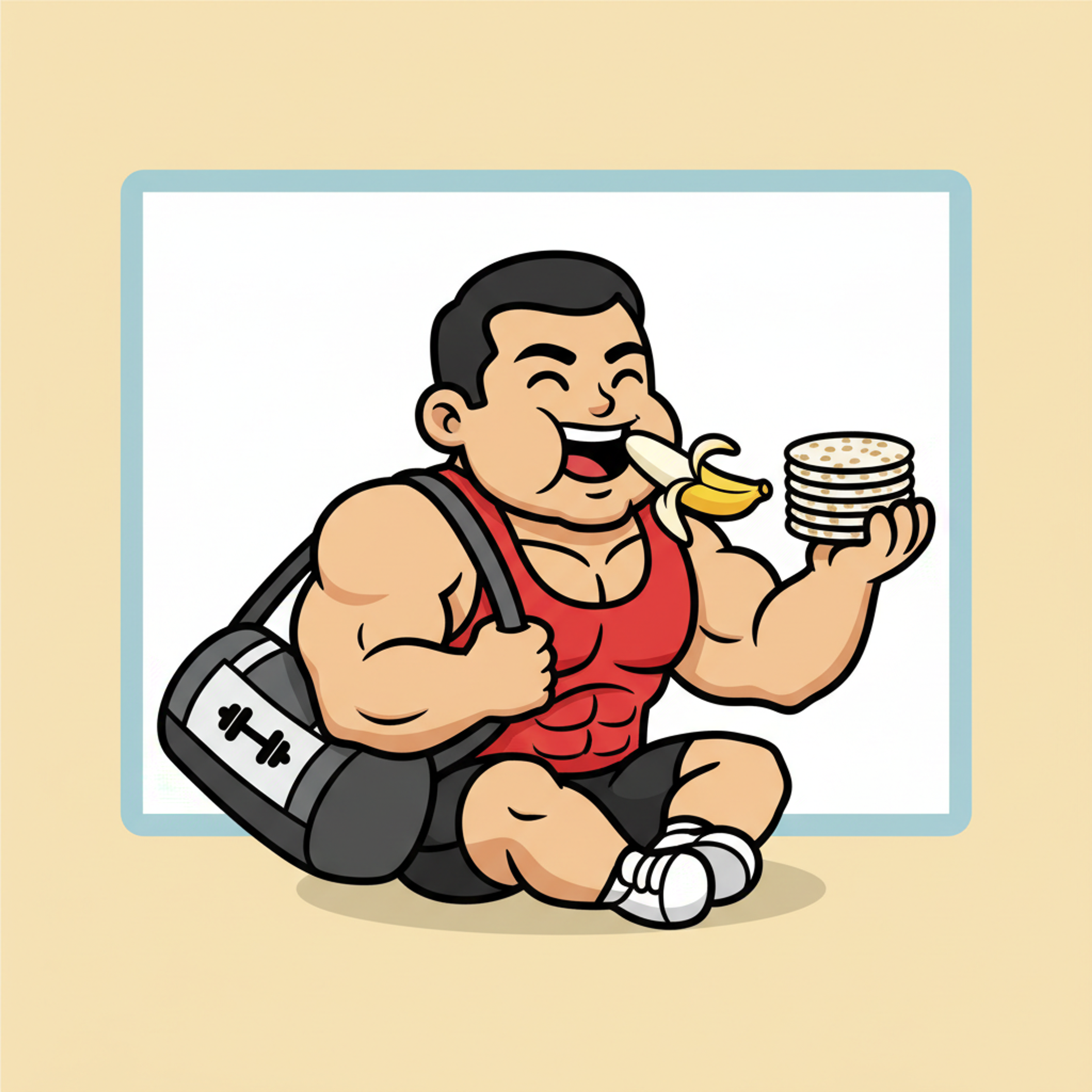
The fear: train fasted and your body will eat your muscle for fuel. The counter-fear: eat too close to training and you will be nauseous under a heavy squat.
Neither extreme is the real answer. The real answer depends on what you are training for and when your session falls.
What Pre-Workout Nutrition Actually Does
Food before training serves two purposes:
- Substrate availability. Your muscles run primarily on muscle glycogen during resistance training. If glycogen stores are low, performance suffers — you fatigue earlier, output drops in later sets, and the session quality decreases.
- Muscle protein availability. Having circulating amino acids before training may reduce net muscle protein breakdown during the session. The effect is modest, but it is real.
Neither of these is an emergency that requires you to chug a shake 20 minutes before every lift. But both matter if you are consistently training in a fasted state or skipping meals.
Does Fasted Training Kill Muscle?
No — not in any meaningful short-term sense.
The body does not simply convert muscle protein to fuel the moment you enter the gym unfed. Glycogenolysis (breaking down stored glycogen) and gluconeogenesis are gradual processes. A short fasted training session will not significantly catabolize muscle tissue.
The larger concern is performance degradation. If fasted training means lower output — fewer reps, less weight moved, lower training quality — then over time, the cumulative training stimulus is lower. That has a real impact on muscle development.
Timing and Practicality
Morning training: This is where the fasted question is most relevant. You wake up with partially depleted glycogen stores after an overnight fast.
- If the session is low-to-moderate intensity (technique work, moderate volume), training fasted is fine.
- If the session is high-intensity (heavy compound work, volume blocks near MRV), something in the stomach improves performance.
- A small, fast-digesting meal 30–60 minutes before — banana, rice cakes, a small bowl of oats — is usually sufficient.
Afternoon/evening training: You have had multiple meals by now. Glycogen stores are well-stocked. Pre-workout nutrition is less urgent. The question becomes whether your last meal was too large and too close to training, causing discomfort.
Practical Guidelines
Timing | Recommendation
Training 3+ hours after a meal | Eat a normal meal. No special pre-workout required.
Training 1–2 hours after | A moderate meal (300–500 kcal, carb-focused) is fine.
Training within 60 minutes of waking | Small fast-digesting snack (30–50g carbs).
Training fully fasted by choice | Acceptable for low-intensity sessions. Supplement with BCAAs if concerned about catabolism.
What Not to Do
Don't eat a large high-fat meal within 2 hours of training. Fat slows gastric emptying significantly. A big breakfast 45 minutes before heavy squats is a recipe for discomfort.
Don't skip eating entirely before an important session. If it is a max-effort day, a competition, or a high-volume training block, showing up completely fasted is leaving performance on the table.
Don't rely on stimulants to compensate for a poor nutritional lead-up. Pre-workout supplements address the neurological side but do nothing for glycogen availability. Caffeine on an empty stomach before a hard session feels great for 20 minutes and produces a crash nobody wants mid-session.
Eat something meaningful before you train hard. The specifics matter less than the habit.
About Rasmus
Powerlifter and coach with more than 7 years in the game.
Related Articles
Small Surplus vs Big Surplus
You want to build muscle. Someone told you to eat in a calorie surplus. Now you need to know how big that surplus should be.
Can You Build Muscle While Losing Fat
Body recomposition — gaining muscle and losing fat simultaneously — is real. It is also frequently overhyped and often applied to people it will not work for.
What to Eat on Rest Days
Rest days produce a lot of unnecessary anxiety. Do you eat less? Do you cut carbs? Do you maintain exactly what you eat on training days?